Hot Tub Wiring 101: What Homeowners Need to Know Before Installation
You’ve picked the model, mapped out the spot in the backyard, and you’re ready to move forward. Then someone mentions dedicated circuits, GFCI disconnects, and panel capacity. What felt like a simple backyard upgrade suddenly has a lot more pieces to it.
The electrical side of a hot tub installation catches homeowners off guard more often than you’d expect. Once you know what’s involved, though, it’s a lot easier to plan for. Here’s what to understand before that hot tub shows up in your driveway.
Hot Tub Electrical Setup at a Glance
- Almost all standard 240V hot tubs require a dedicated circuit that serves only that appliance
- Most hot tubs need a 50-amp, 240V GFCI-protected circuit installed by a licensed electrician
- A disconnect box must be installed within sight of the hot tub, at least 5 feet away
- 120V plug-and-play models exist but come with real performance trade-offs, especially in colder climates
- Older or smaller panels may need an upgrade before a hot tub circuit can be added safely
- Hot tub electrical work requires permits and inspections in Washington State
Yes, a Hot Tub Almost Always Needs a Dedicated Circuit
If you’re buying a standard 240-volt hot tub, a dedicated circuit is required under the National Electrical Code (NEC)—and that covers the vast majority of full-size models on the market.
A dedicated circuit serves a single appliance and nothing else. No shared loads, no other outlets on the same breaker. Hot tubs draw sustained power to run the pump, heater, and jets simultaneously, and that continuous demand needs its own protected line running directly from the electrical panel.
Running a hot tub on a shared circuit overloads the wiring, causes breakers to trip repeatedly, and creates a fire risk near the water. The specific requirements are outlined in NEC Article 680, which governs electrical installations for pools and spas.
What Hot Tub Electrical Work Actually Involves
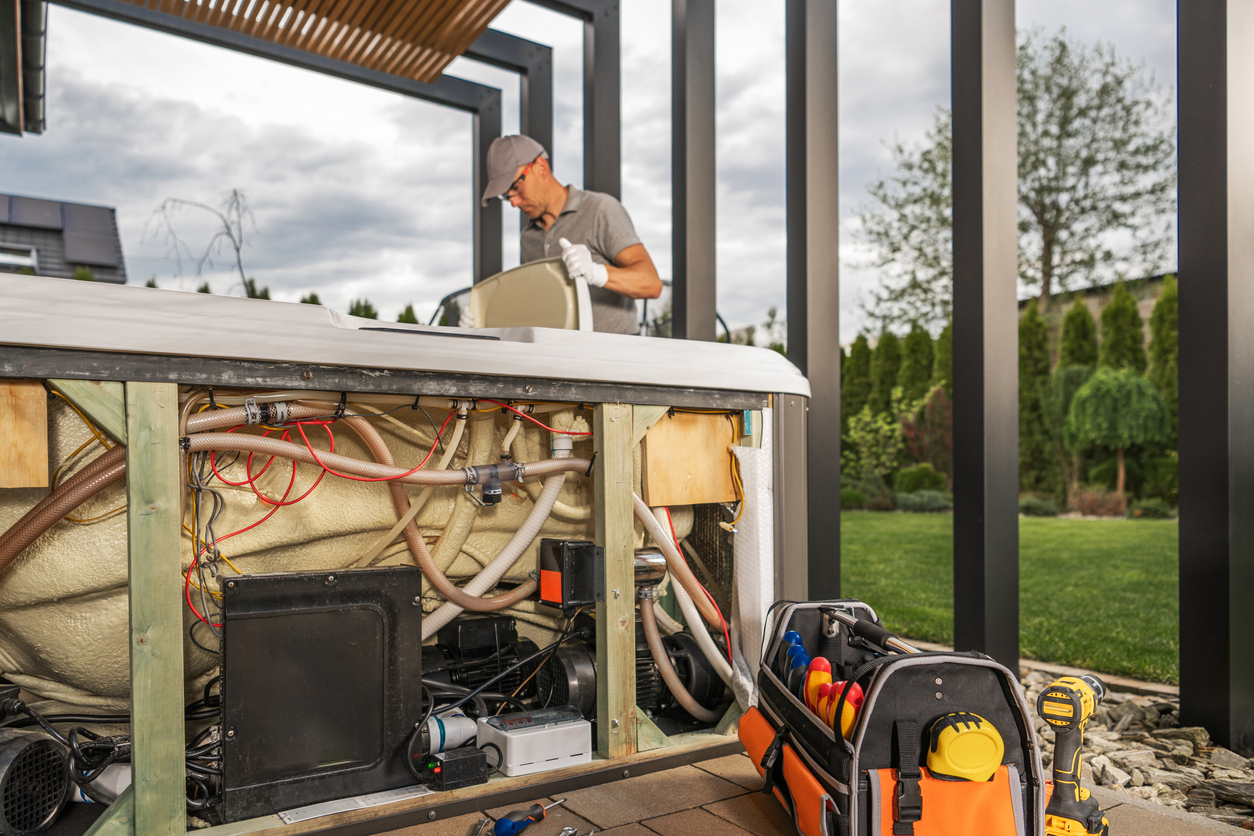
There are three main components to a hot tub electrical setup: the dedicated circuit, the wiring that carries power from the panel to the unit, and the safety disconnect. Each has its own code requirements, and they all need to be right before the tub goes into regular use.
Voltage & Amperage
Most standard hot tubs run on 240 volts and require between 40 and 60 amps, with 50 amps being the most common spec. That puts the load in the same range as an electric dryer or a Level 2 EV charger, which means your panel needs available capacity to handle it before work begins.
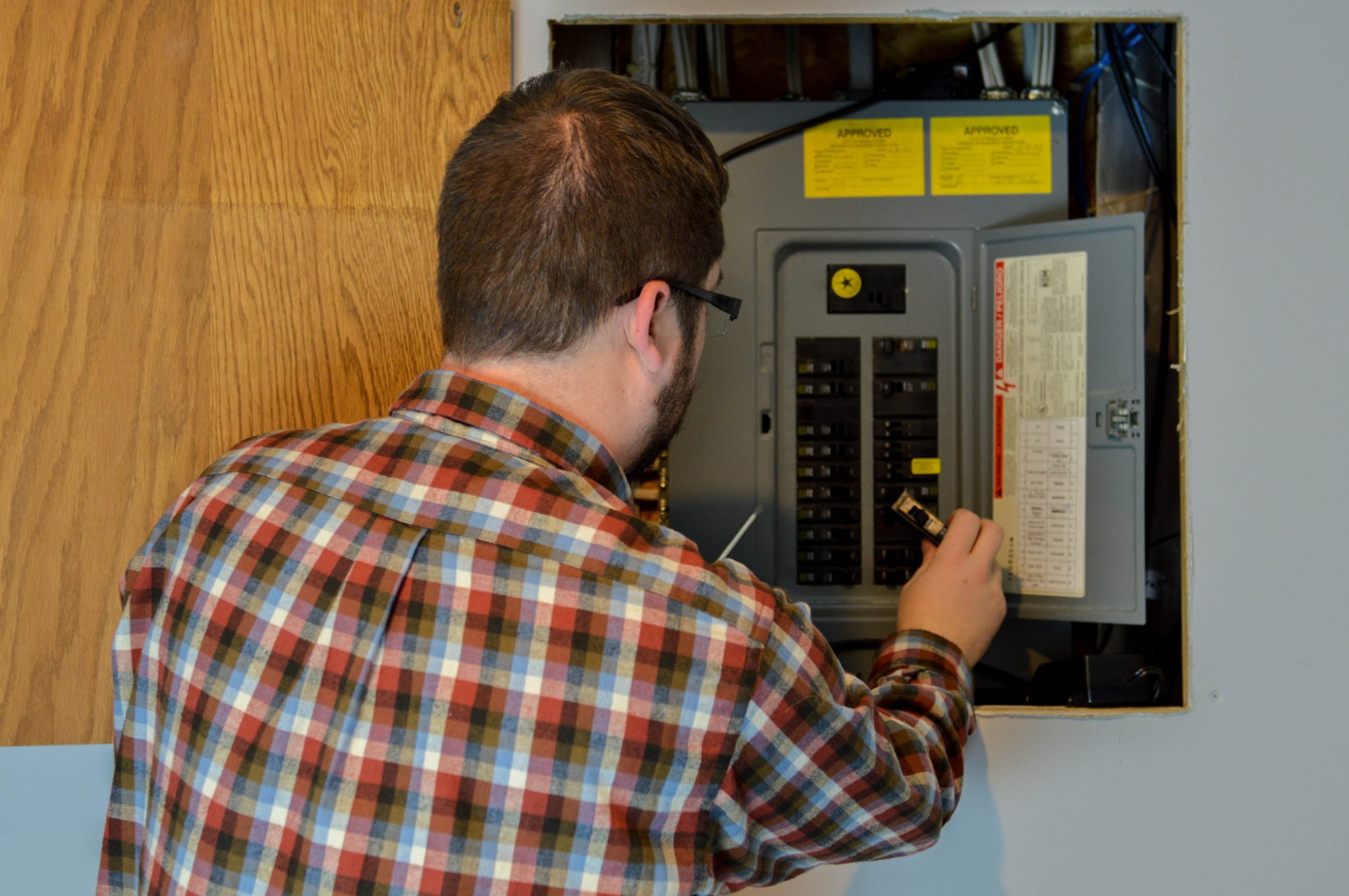
A licensed electrician will evaluate your current panel load as part of the process. If the panel is full or undersized, that gets sorted out before the hot tub circuit gets added.
Wire Gauge & Conduit
A 50-amp, 240V circuit typically requires 6-gauge wire run through conduit from the panel to the disconnect location. In most residential installations, that wiring runs underground to protect it from weather and physical damage. The exact route depends on yard layout, distance from the panel, and local code requirements.
NEC Article 680 sets the standards for wire gauge, conduit type, burial depth, and connection method. All of it applies to hot tub installations.
The GFCI Disconnect Box
A GFCI-protected disconnect box is required within sight of the hot tub, at least 5 feet away but no more than 10 feet. This is what lets you or emergency responders cut power to the unit quickly. The GFCI function trips immediately when it detects a current imbalance, which is essential any time electricity is operating near standing water.
Some hot tub models include built-in GFCI protection, but a separate outdoor disconnect is still required by code. Your electrician will confirm the right configuration based on your specific model and local requirements.
What About 120V Plug-and-Play Hot Tubs?
Not every hot tub requires a dedicated 240V circuit. Smaller plug-and-play models run on standard 120-volt power and connect to a regular 20-amp GFCI outlet. If your home already has a properly rated outdoor GFCI outlet near the planned location, setup is more straightforward.
The trade-off is performance. A 120V hot tub heats more slowly, runs fewer jets at once, and tends to struggle holding temperature on cold nights. In Western Washington, where fall and winter are when a hot tub sounds most appealing, that’s a real limitation to consider before committing to the smaller model.
If you’re unsure whether your existing outdoor outlet is correctly rated or positioned safely, have an electrician check it before anything gets plugged in.
Will Your Panel Support the Added Load?
This is the question that surprises homeowners most. A 50-amp dedicated circuit is a meaningful load increase, especially in homes already running a heat pump, electric water heater, or EV charger. If you’ve been wondering how your home’s existing power draw breaks down, determine what is using the most electricity in your home before adding another high-demand appliance to the mix.
A few signs your panel may need attention before the hot tub circuit gets added:
- The panel is more than 25 years old
- Breakers have been tripping more often than usual
- Other high-draw appliances have been added in recent years
- There are few or no open breaker slots remaining
Rhema Electric’s panel upgrade services include this kind of capacity evaluation. Knowing where things stand before installation day keeps the project on track and avoids surprises mid-job.
Permits & Inspections Are Part of the Job
Hot tub electrical installations require permits in Washington State, and skipping that step can create real problems down the road. A permitted installation is inspected, confirming that the work meets code before the tub goes into regular use.
Washington’s specific requirements for hot tub and spa electrical installations are codified under WAC 296-46B-680, the state’s adoption and amendment of NEC Article 680. That’s the standard contractors and inspectors follow on every job, and it’s what Washington State’s Department of Labor and Industries (L&I) uses to govern electrical permitting statewide.
Unpermitted work can affect homeowner’s insurance claims and complicate the sale when it’s time to sell. When you work with Rhema Electric, we handle the permitting process as part of every hot tub installation, so you don’t need to navigate it on your own.
Hot Tub Wiring Is Not a DIY Project
Unlike the basic electrical repairs that homeowners can safely handle themselves, hot tub wiring belongs in the hands of a licensed electrician. High voltage, continuous load, outdoor exposure, underground conduit work, and proximity to water create a combination of requirements that go well beyond everyday household electrical tasks.
The U.S. Consumer Product Safety Commission (CPSC) identifies faulty wiring and missing GFCI protection as leading causes of electrocutions in and around hot tubs and spas. A properly installed, properly inspected installation is the only reliable way to make sure that doesn’t happen in your backyard.
What to Do Before Your Hot Tub Installation Day
The electrical planning needs to come before anything else is finalized. A few questions are worth working through early:
- How far is your electrical panel from where the hot tub will go? → Distance affects the complexity of the conduit run and overall project cost.
- Is there a clear path for underground wiring? → Concrete, landscaping, and hardscaping all factor into how the route gets planned.
- Are there other upgrades on your list? → If an EV charger or additional circuits are also in the works, evaluating panel capacity for everything at once is more efficient than revisiting it project by project.
Getting these answers early keeps the job on schedule and makes the installation itself go much more smoothly.
A Safe Hot Tub Starts With a Solid Electrical Plan
Hot tub electrical work has more steps than most homeowners expect going in, but the bulk of the complexity lives in the planning phase. Once your panel capacity is confirmed, the right circuit is spec’d out for your model, and permits are in order, the installation moves quickly.
The real key is getting a licensed electrician involved before you finalize anything else. Knowing what your home’s electrical system needs upfront means no surprises when the delivery truck pulls up, and it means you end up with a setup that holds up season after season.
Get Your Hot Tub Wired Right the First Time With Rhema Electric in Western Washington
A hot tub installation is one of the more involved backyard projects from an electrical standpoint, and it deserves the attention of a trusted electrical contractor with decades of experience. Rhema Electric has been serving Western Washington homeowners since 2005 with permitted, code-compliant installations and straightforward guidance from start to finish.
Our Safety and Savings Membership includes priority scheduling, an annual electrical inspection, and 15% off standard installations—a smart add-on for homeowners taking on a project like this.
Call us at (360) 416-8227 or contact us online. We serve Burlington, Bellingham, Mt. Vernon, Marysville, Everett, Seattle, Bellevue, and communities throughout Western Washington.
Related Posts