Tripped Circuit Breaker? Here’s What It’s Trying to Tell You
Your kitchen circuit goes out mid-dinner. You head to the panel, flip the breaker back on, and get on with your evening. A week later, it happens again. At some point, that routine stops being an inconvenience and starts being a question worth answering. A circuit breaker that trips repeatedly is your electrical system flagging something, and the something matters.
This guide walks through the most common reasons a breaker trips, how to figure out which one applies to your situation, and when it’s time to stop resetting and start calling a licensed electrician.
At a GlaNce
- A tripped circuit breaker is a safety feature, not a flaw. It’s doing exactly what it’s designed to do
- The three main causes are overloaded circuits, short circuits, and ground faults
- A breaker that won’t reset, or one that trips repeatedly without a clear cause, may be faulty
- You can safely reset a tripped breaker yourself, but repeated trips need a closer look
- Some breaker box issues require a licensed electrician to diagnose and fix safely
- Older panels and frequently tripping breakers are signs that it may be time for a panel evaluation
Why Circuit Breakers Trip in the First Place
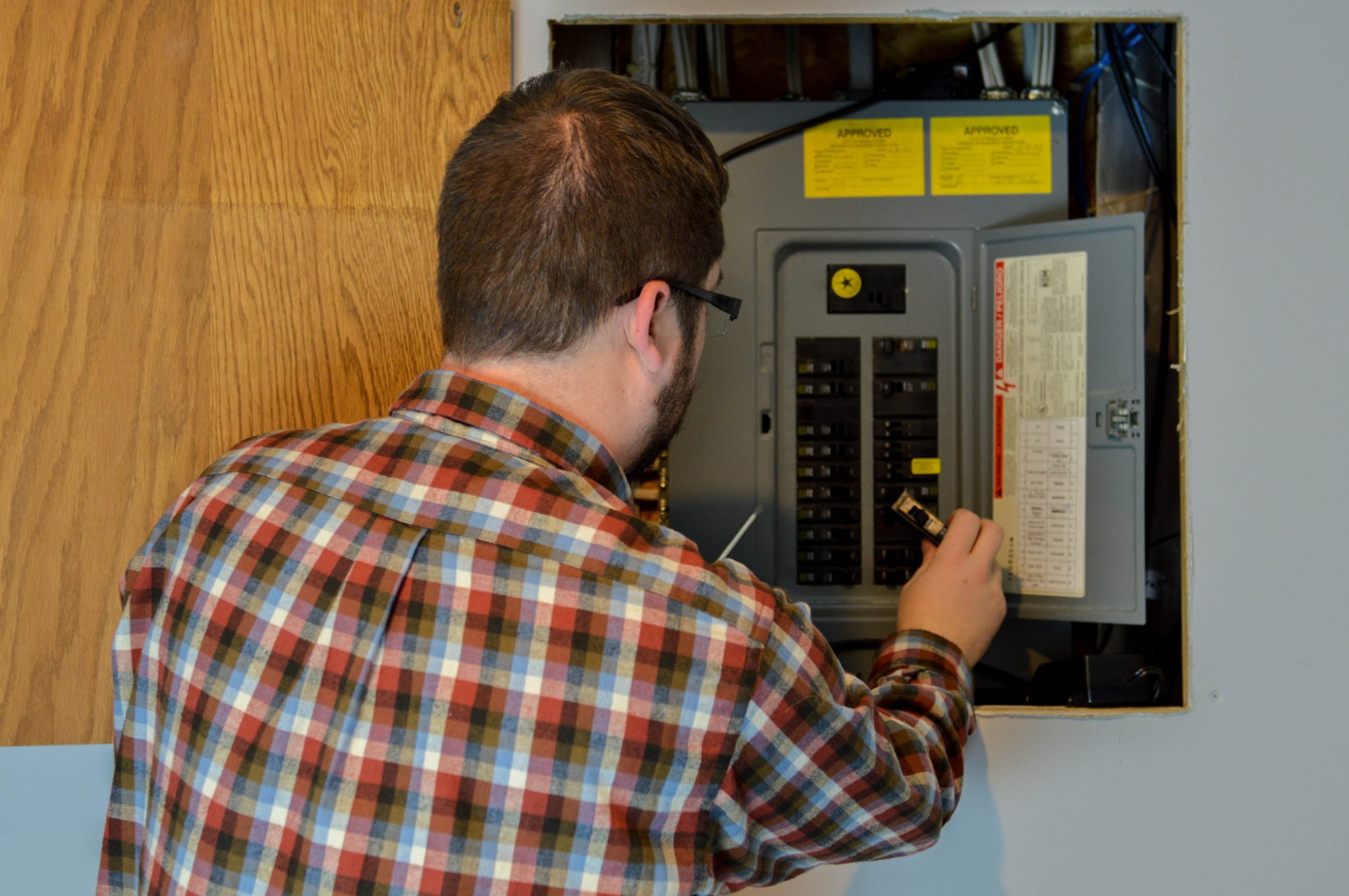
Your breaker panel is the central hub of your home’s electrical system. Each circuit breaker in that panel protects a specific circuit, covering a group of outlets, lights, or appliances, by automatically cutting power when something goes wrong.
When too much current flows through a circuit, the breaker trips to prevent the wiring from overheating. Without that protection, overloaded or damaged wiring could cause a fire. So before you get frustrated with a tripped circuit breaker, it helps to remember: it just kept something worse from happening.
The challenge is understanding why it tripped, because the fix depends entirely on the cause.
The Three Most Common Reasons a Breaker Trips
1. Overloaded Circuit
This is the most frequent cause, and often the most straightforward to fix. An overloaded circuit happens when the total electrical demand on a circuit exceeds what it’s rated to handle. Most standard household circuits are rated for 15 or 20 amps. When too many devices draw power at the same time, the breaker trips to protect the wiring.
Common signs of an overloaded circuit:
- The breaker trips consistently when you use multiple appliances at once
- The tripping is tied to a specific room or area of the house
- The circuit serves a high-demand space like a kitchen, laundry room, or home office
The short-term fix is to reduce the load: unplug some devices, spread usage across different circuits, or avoid running high-draw appliances simultaneously. The longer-term fix may involve adding a dedicated circuit for appliances that need consistent, heavy power.
2. Short Circuit
A short circuit is more serious. It happens when a hot wire (the wire carrying current) makes direct contact with a neutral wire or a grounding conductor, creating a path of very low resistance. The result is a sudden surge of current that trips the breaker immediately.
Short circuits can be caused by damaged wiring, a loose connection inside an outlet or switch, a faulty appliance cord, or deterioration in older wiring. You may notice a burning smell, visible scorch marks around an outlet, or a loud pop when the breaker trips.
If you suspect a short circuit, this is not a reset-and-hope situation. A short circuit left unaddressed is a fire risk. A licensed electrician needs to locate and repair the fault before power is restored to that circuit.
3. Ground Fault
A ground fault occurs when a hot wire contacts a grounded surface such as the metal housing of an appliance, a damp floor, or an improperly wired outlet. Ground faults are particularly dangerous in areas where water is present, like bathrooms, kitchens, and outdoor circuits. This is exactly why GFCI (ground fault circuit interrupter) outlets and breakers exist: they detect these faults and cut power in a fraction of a second.
If your GFCI outlet is tripping repeatedly or you’re losing power in a wet area of your home, a ground fault may be the cause. The source can be a faulty appliance, damaged wiring, or moisture intrusion that has compromised an outlet or fixture.
Faulty Breaker Symptoms: When the Breaker Itself Is the Problem
Sometimes the issue isn’t the circuit at all. It’s the breaker. Breakers are mechanical devices, and like anything mechanical, they wear out over time. A faulty breaker can trip under normal load conditions, refuse to stay reset, or fail to trip when it actually should (which is the more dangerous scenario).
Watch for these faulty breaker symptoms:
- The breaker won’t reset after being tripped, even with the load removed
- It trips immediately after resetting, with nothing drawing power
- It feels warm or hot to the touch, or you notice a burning smell near the panel
- The breaker handle is loose or doesn’t click firmly into the on position
- You see signs of arcing or discoloration inside the panel around the breaker
A breaker that won’t reset despite no load on the circuit is often a sign that the breaker itself has failed. This isn’t something to work around. A failed or weakened breaker needs to be replaced by a licensed electrician, and the panel should be inspected at the same time to rule out any underlying breaker box issues.
How to Safely Reset a Tripped Circuit Breaker
If your breaker has tripped and you want to reset it, here’s the right way to do it:
- Identify the tripped breaker. Open your panel and look for the breaker that has moved to the middle position (between “on” and “off”) or is visually marked as tripped. Some panels use a small indicator window that turns red.
- Turn off or unplug the devices on that circuit. Before resetting, reduce the load so you’re not immediately tripping it again.
- Push the breaker fully to “off” first. Don’t try to flip it directly to “on.” The breaker needs to be fully reset by moving it to the off position before switching back on.
- Flip it back to “on.” It should click firmly into place.
- Test the circuit gradually. Plug devices back in one at a time and observe whether the breaker holds.
If the breaker trips again quickly, or if it won’t reset at all, stop there. Repeated resetting without addressing the underlying cause can damage wiring, appliances, or the breaker itself.
When to Stop Resetting and Call an Electrician
Most homeowners can handle a one-time trip on a kitchen circuit. But there are clear situations where circuit breaker repair by a licensed electrician is the right call. Not a suggestion, a necessity.
Call an electrician if:
- The breaker keeps tripping even after you’ve removed the load, which points to a short circuit, ground fault, or a failing breaker
- You notice burning smells, scorch marks, or discoloration near outlets or inside the panel
- The breaker won’t reset at all, or it resets but trips immediately
- Multiple breakers are tripping, or you’re experiencing issues across several circuits
- Your panel is more than 25 to 30 years old and is showing frequent breaker box issues, as older panels may no longer be adequate for modern electrical loads
- You have a Federal Pacific or Zinsco panel, which is known to have safety concerns and should be evaluated by a professional
These aren’t situations where waiting makes sense. Electrical problems that aren’t addressed tend to get worse, not better.
A Note on Older Homes and Panel Capacity
Homes in Western Washington built before the 1980s were often wired for a fraction of today’s electrical demands. A panel sized for a household with one TV and no home office struggles when modern life adds multiple computers, EV chargers, heat pumps, and high-draw kitchen appliances.
If your breakers trip regularly and your home is older, the issue may not be any single circuit. The panel itself may be undersized or outdated. A panel evaluation by a licensed electrician can tell you whether your current setup is safe and whether an upgrade makes sense.
Quick Reference: What’s Causing Your Breaker to Trip?
| What’s Happening | Likely Cause | What to Do |
| Trips when multiple appliances run at once | Overloaded circuit | Reduce load; consider a dedicated circuit |
| Trips with a pop or burning smell | Short circuit | Do not reset. Call an electrician |
| Trips in a bathroom, kitchen, or outdoor circuit | Ground fault | Check GFCI outlets; call an electrician if unresolved |
| Trips under normal load, no obvious cause | Faulty breaker | Call an electrician to inspect and replace |
| Breaker won’t reset at all | Failed breaker or serious fault | Call an electrician |
| Multiple breakers tripping | Panel capacity or wiring issue | Schedule a panel evaluation |
Knowing the Difference Keeps Your Home Safe
A tripped breaker is rarely a disaster, but it’s always worth paying attention to. Overloads are usually fixable with a few habit changes or a simple circuit addition. Short circuits and ground faults need professional attention. And a breaker that won’t reset or keeps tripping on its own is telling you something is wrong that resetting won’t solve.
The goal isn’t to reset your way through the problem. It’s to understand what the breaker is reacting to so you can actually fix it.
Need Help Diagnosing a Breaker That Keeps Tripping?
Rhema Electric has been helping Western Washington homeowners troubleshoot and repair electrical systems since 2005. Whether you’re dealing with a single faulty breaker, recurring circuit issues, or breaker box concerns that need a professional eye, our licensed electricians can assess your system and give you honest answers.
Ask about our Safety & Savings Membership, which includes priority scheduling, annual electrical inspections, and service discounts that make staying ahead of issues like this a lot easier. Contact Rhema Electric in Burlington, WA, to get started.
Related Posts